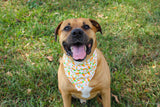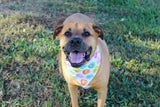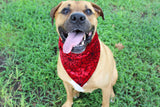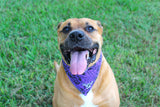


The most common reason a dog bandana fails isn’t the fabric or the pattern—it’s the knot. If the tie is too loose, it slips; if it’s too tight, it chafes. Getting that single point right makes the rest of the accessory work for you, not against you.

Start With the Neck, Not the Look
Before you fall in love with a specific print, check the measurements. This is the step most shoppers skip, and it’s the one that causes the most returns. Measure gently around the base of your dog’s neck, where the collar sits naturally. Don’t pull the tape tight; you want the resting circumference, not the compressed one.
At Waggy Wear, we keep it simple with two sizes: Small fits necks up to 17 inches, and Large fits up to 23 inches. This binary approach removes the guesswork of “Medium” or “X-Large” charts that vary wildly between brands. If you are right on the edge, size up. A slightly larger tie-on dog bandana allows for a looser, more comfortable knot that won’t shift during movement.
The Fabric Factor in Real Life
Cotton is the gold standard for everyday wear, and for good reason. It breathes, it’s soft against short and long coats alike, and it handles frequent washing without falling apart. Many owners find that cotton dog bandanas feel less like “costume” gear and more like a practical layer, especially on days when your dog is active.
However, fabric weight matters. A very thin cotton might look delicate in photos but can fray quickly at the knot if tied aggressively. We prefer a medium-weight cotton that holds its shape but remains soft. If your dog is a chewer, watch the edges. Reinforced hems or thicker stitching can extend the life of the accessory significantly.
A Common Misconception About Size
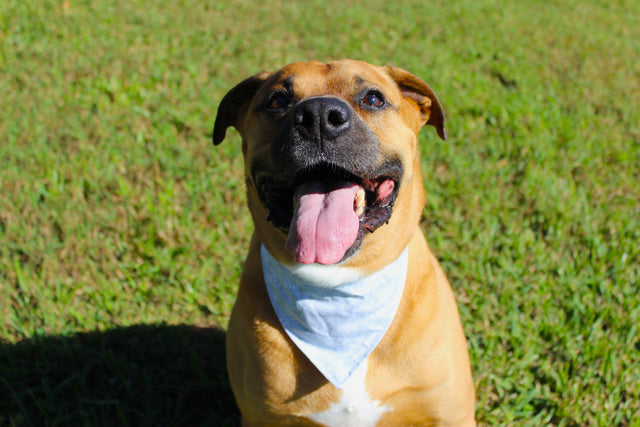
Most people assume that a bandana needs to be snug to stay in place. In reality, the opposite is often true. A bandana that is tied too tight creates friction against the neck, which can lead to irritation or hair loss over time. The knot should be secure enough that it doesn’t unravel, but loose enough that you can slide two fingers underneath. If you can’t, it’s too tight. The fabric’s weight and the knot’s tension work together; you don’t need to crush the neck to keep it put.

Choosing a Pattern That Works
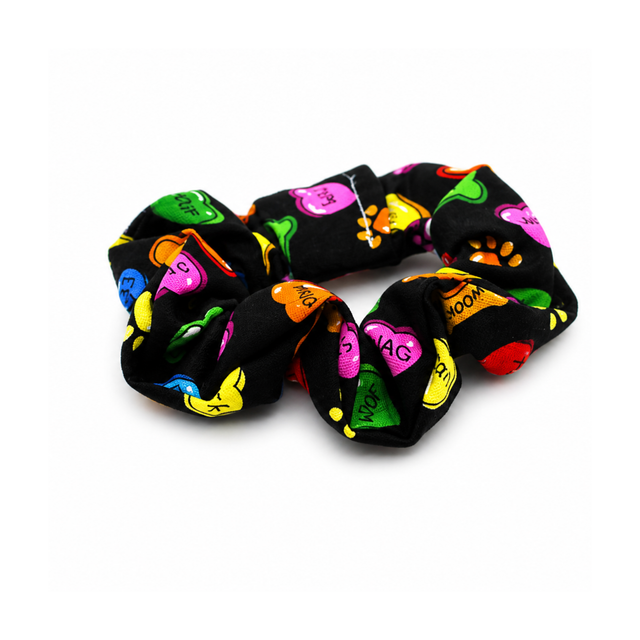
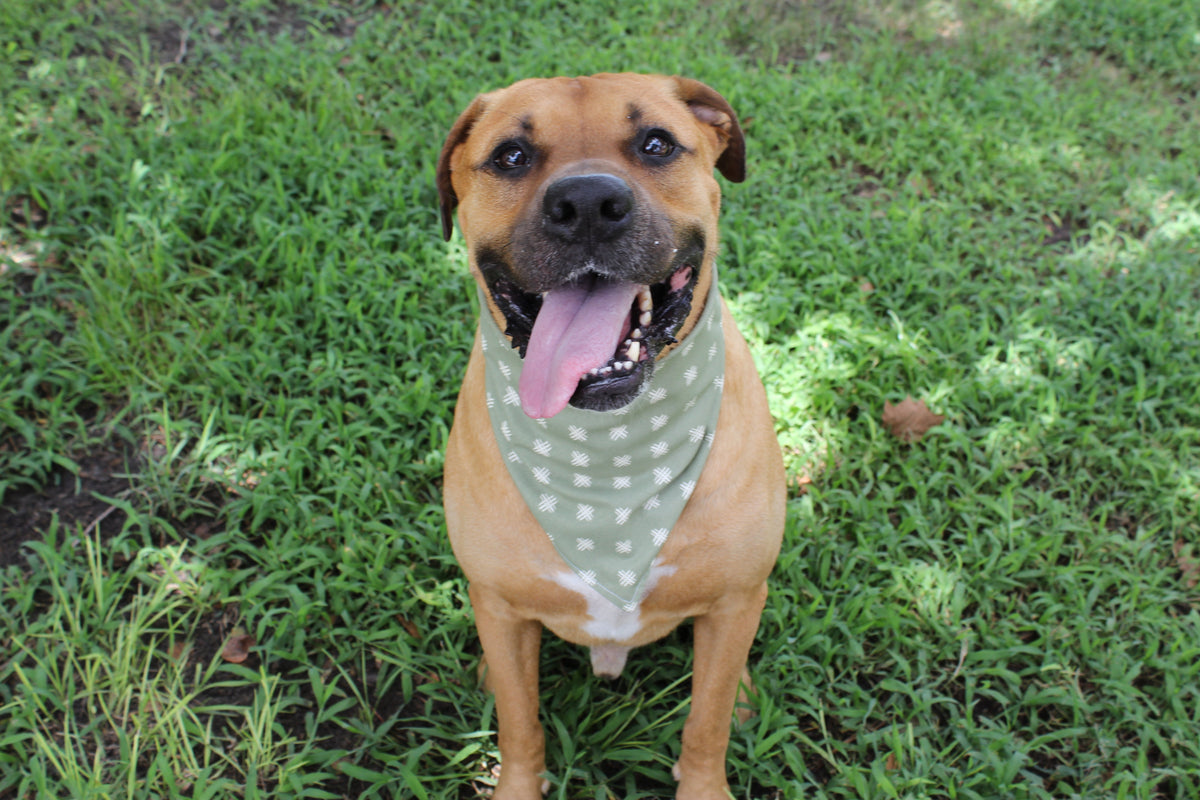
Patterned dog bandanas add personality, but the scale of the print matters. A tiny, busy pattern can get lost on a small dog, while a large, bold print can dominate a small frame. Many owners find that medium-sized prints offer the best balance—visible enough to be fun, but not overwhelming.
Consider your dog’s coat color. Dark patterns tend to disappear into black or dark brown fur, while light patterns can blend into white or cream coats. If you want the bandana to stand out, choose a contrast color to your dog’s fur. If you prefer a subtle look, match the tone.
- Check the hem for double stitching to prevent fraying
- Look for a tie-on style that adjusts easily without a buckle
- Pick a cotton blend that feels soft but holds its shape

Caring for Your Accessories
Washing is simple, but drying matters. Tumble drying on high heat can shrink cotton and weaken the stitching. Air drying is gentler and keeps the fabric soft. If your dog gets muddy, a quick rinse before washing can prevent clogging your washing machine. Hang the bandana to dry, and smooth out the fabric while it’s damp to reduce wrinkles.
Rotating your accessories is a smart habit. If you have two or three bandanas, you can let one air out while the others are in use. This extends the life of each piece and keeps them looking fresh.
Frequently Asked Questions
Can I use a bandana if my dog has a sensitive neck?
Yes, but pay close attention to the knot. A tight knot can cause friction burns or irritation. Ensure the bandana is loose enough to slide two fingers underneath, and check the skin regularly. If you notice redness, take a break from wearing it.
Do handmade dog bandanas last longer than mass-produced ones?
They often do, due to the quality of materials and construction. Handmade pieces tend to have stronger stitching and higher-quality fabric. However, care is still the biggest factor in longevity. Proper washing and drying will extend the life of any bandana.
How do I know if the pattern is too busy for my dog?
Look at the scale relative to your dog’s size. If the pattern is so small it looks like a blur from a distance, it might be too busy. A medium-sized print is usually a safe bet for most dogs. You can always start with a solid color to see what works best for your dog’s style.
A Final Thought
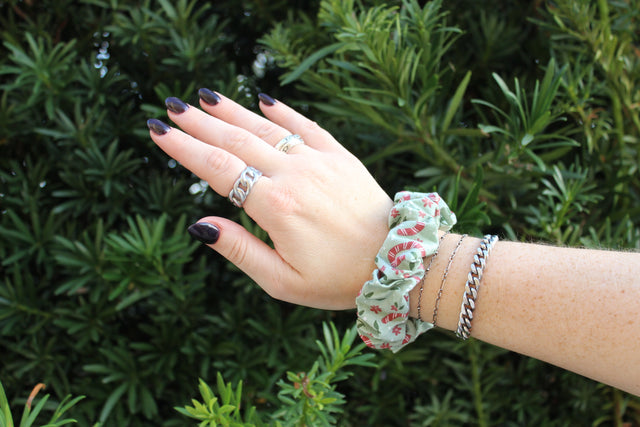
A good bandana should feel like a natural part of your dog’s routine, not a chore to manage. If you’re looking for handmade dog bandanas that are adjustable, durable, and designed with real life in mind, we’d love to show you what a small family business can do. Explore our collection of cotton dog bandanas and matching accessories at Waggy Wear—where every piece is made to be worn, not just admired.